


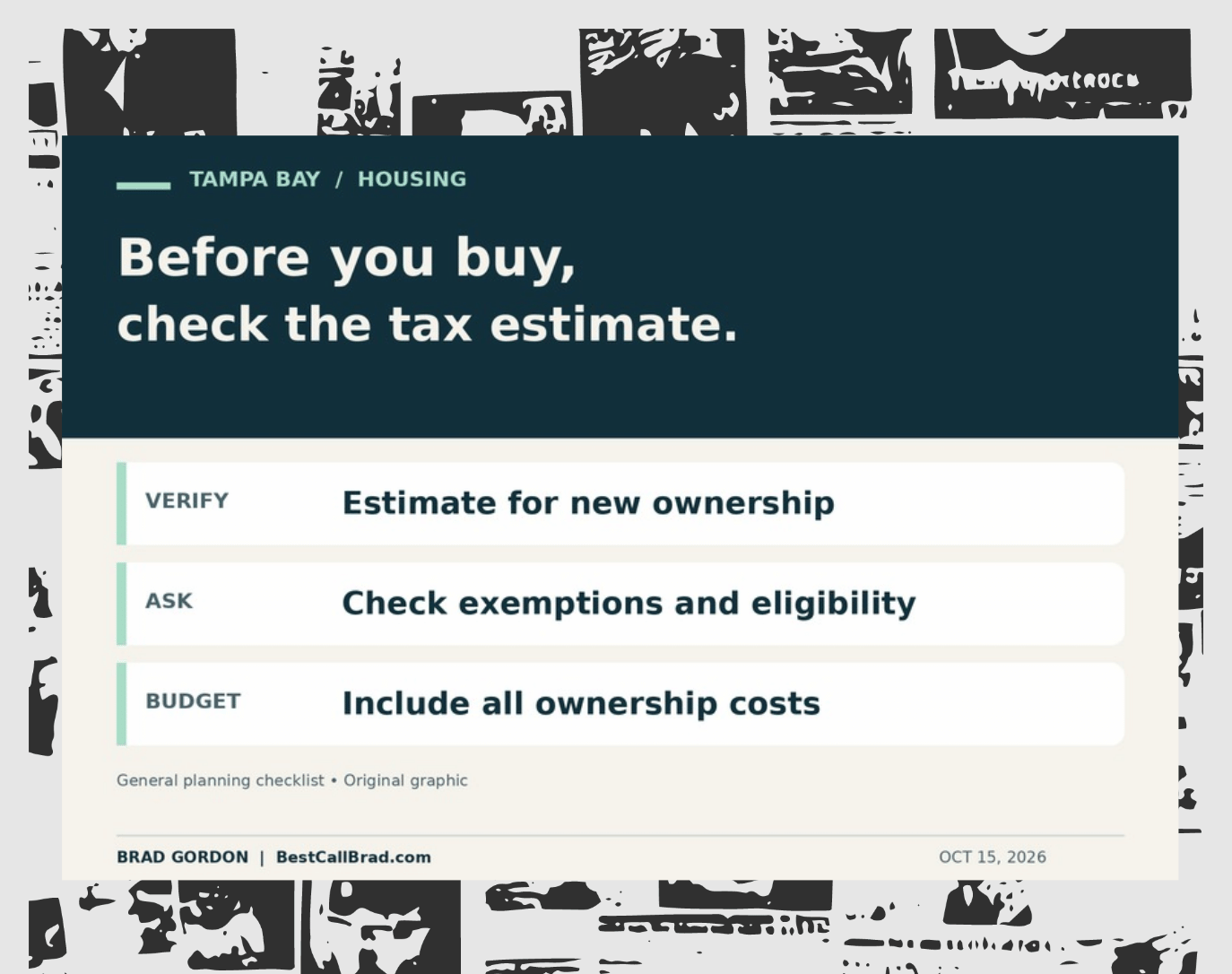
Axios reported October 6 that unchanged or lower Tampa Bay tax rates can still leave homeowners with larger bills.
If you are buying, that is a good reason to look closely at the tax number in your estimated monthly payment. I would want to know where that number came from before using it to decide what I can afford.
The Pinellas County Property Appraiser specifically directs buyers to its tax estimator to estimate taxes under new ownership after the first January 1 they own the property. It is a useful starting point when reviewing a home in that county. For a home elsewhere in Tampa Bay, use the appropriate county property appraiser and ask questions about that specific parcel.
Ask whether the estimate uses your purchase situation
When you receive a payment estimate, ask whether the property tax amount comes from the seller’s current bill or an estimate for your ownership. If the answer is unclear, get it clarified before treating that payment as your working budget.
A listing’s tax history is helpful information about the property. I would still want a separate estimate based on the proposed purchase and any exemptions you may qualify for. Do not assume the amount displayed on a search website is the amount you will pay.
Keep a copy of the estimate and note the assumptions used. If the purchase price changes during negotiation, ask whether the estimate needs to be updated. That is easier than trying to remember which numbers were included in an early conversation.
Get exemption questions answered for your circumstances
If you plan to use the property as your primary residence, ask the county property appraiser about homestead eligibility, application requirements, and timing. If you already own a Florida home, ask whether portability could apply to your move. Get those answers for your situation rather than assuming someone else’s experience will match yours.
I would also ask what happens if an exemption is not reflected in the initial estimate. You want a budget that you can work with while the details are being confirmed. Buying should not depend on a benefit that nobody has verified you can receive.
These are good questions to bring up early, especially when you are moving from another state. Put them on the same list as your financing and insurance questions so they are handled before the last few days of the purchase.
Compare homes using a consistent monthly worksheet
For each home you seriously consider, write down principal and interest, estimated property taxes, insurance, and any association or community charges. Ask about assessments and any other property-specific expenses that should be included. Keep recurring costs separate from one-time closing expenses so you can see both clearly.
If one estimate is based on verified information and another uses a rough online number, you are not making a useful comparison yet. Mark the uncertain items and follow up. That small amount of organization can make choosing between two homes much easier.
Leave yourself some room
I would not set a purchase budget that requires every estimate to turn out perfectly. Decide what payment feels comfortable, what cash you want to keep available, and how you would handle an unexpected expense after moving.
Before writing an offer, review the tax estimate with the other ownership costs and ask your lender how those figures are being handled. The point is to make a decision using numbers that fit your purchase. What part of the monthly cost would you want to understand better before buying your next home?